---
title: Foot Swelling and Edema in Diabetes: Causes, Symptoms, and Treatment
date: 2026-06-19T00:00:00+03:00
author: Prof. Dr. Aytaç Çetinkaya
url: /en/health-articles/foot-swelling-edema-in-diabetes-causes-and-treatment
description: An informational guide explaining the underlying circulatory, renal, and infectious causes of foot and leg swelling (edema) in people with diabetes, when it becomes dangerous, and treatment approaches.
keywords: şeker hastalarında ayak şişmesi neden olur, diyabette ayak ödemi, şeker hastası ayak şişmesi, diyabetik ayak şişmesi, diyabette bacak şişmesi, şeker hastalarının ayakları neden şişer
tags:
- ayak şişmesi
- ödem
- diyabet
- dolaşım
- belirtiler
- tedavi
categories:
- Diyabet
- Diyabetik Ayak
- Sağlık
language: en
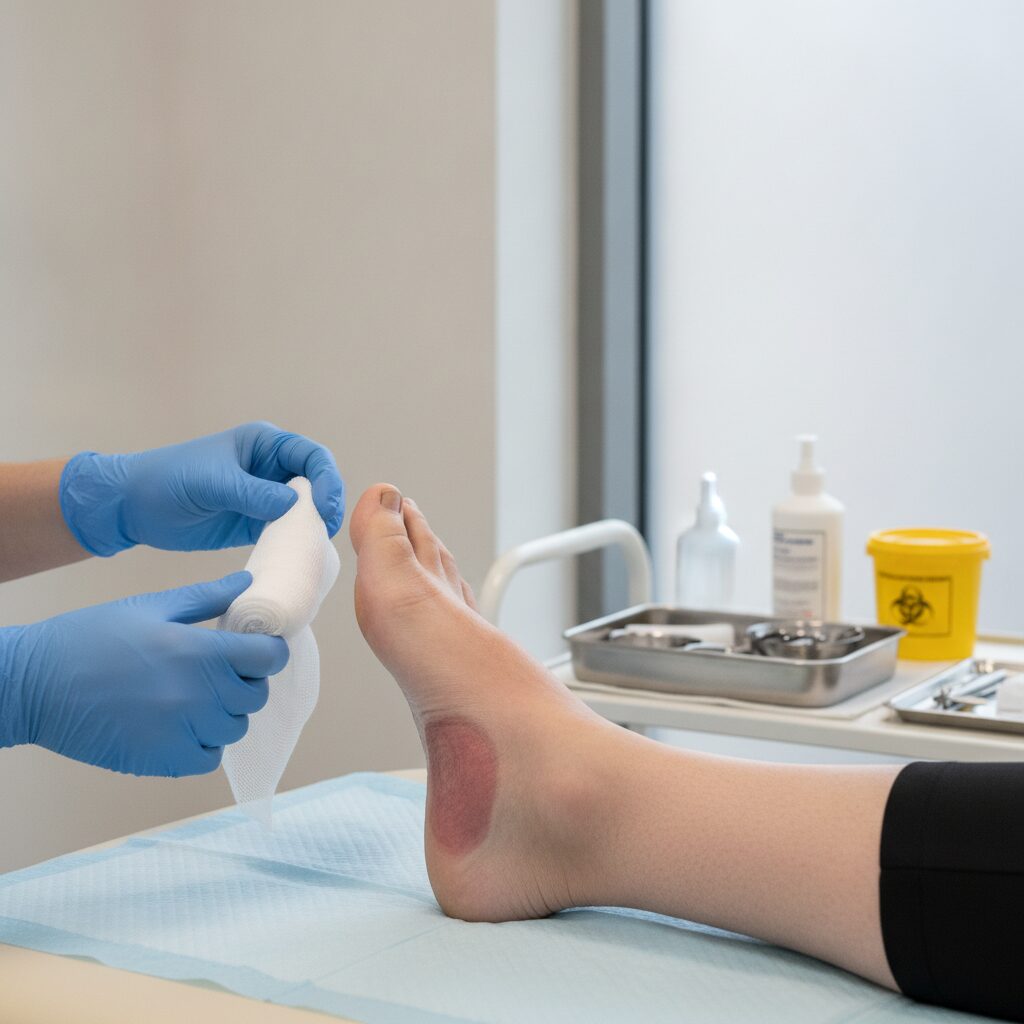
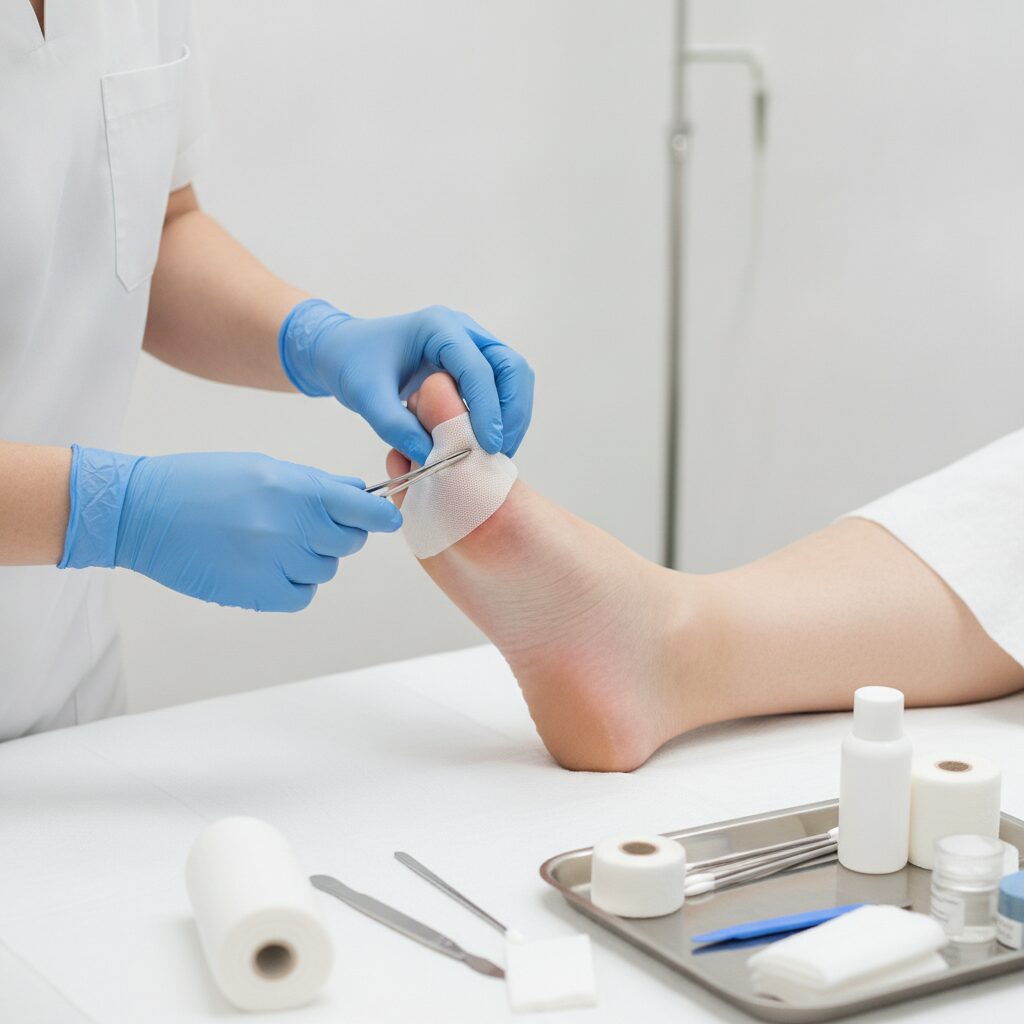
---<h1 id=foot-swelling-and-edema-in-diabetes-causes-symptoms-and-treatment>Foot Swelling and Edema in Diabetes: Causes, Symptoms, and Treatment</h1><p><em>Author: Prof. Dr. Aytaç Çetinkaya · Medically reviewed by: Prof. Dr. Aytaç Çetinkaya · Updated: 2026-06-19</em></p><h2 id=short-answer>Short Answer</h2><p>Foot swelling and edema in diabetes can develop due to circulatory problems, kidney damage (diabetic nephropathy), heart problems, venous insufficiency, infection, or failure to notice trauma due to neuropathy. If you experience sudden swelling in one foot, increased warmth, redness, a wound, or shortness of breath, you should seek medical evaluation the same day.</p><p>In everyday life, complaints of “foot swelling in people with diabetes” are quite common, and most people assume this is simply due to “salt” or “standing for too long.” However, <strong>foot swelling in diabetes</strong> can sometimes be simply fluid retention, while at other times it may be a sign of a more serious condition resulting from diabetes’ effects on blood vessels, nerves, kidneys, and the immune system. In this article, we’ll provide clear and practical answers to questions such as “<strong>What causes foot swelling in people with diabetes?</strong>,” “<strong>When is diabetic foot swelling</strong> dangerous?,” “What can be safely done at home, and when should you see a doctor?” We’ll also discuss the differences between <strong>swelling in one foot</strong> and <strong>swelling in both feet</strong>, critical but often overlooked conditions like Charcot foot, and the possibility of medication-induced edema. The goal is to correctly interpret symptoms, avoid delaying treatment for high-risk situations, and protect foot health.</p><hr><h2 id=what-causes-foot-swelling-in-people-with-diabetes>What causes foot swelling in people with diabetes?</h2><p><strong>The answer to the question “What causes foot swelling in people with diabetes?”</strong> cannot be reduced to a single cause; diabetes’s effects on blood vessels, nerves, kidneys, and the cardiovascular system can lead to edema through various mechanisms. The most accurate approach is to identify the possible causes based on whether the swelling is <strong>in one foot or both feet</strong> and the accompanying symptoms.</p><h3 id=what-are-the-most-common-mechanisms-behind-foot-swelling-in-diabetes>What are the most common mechanisms behind foot swelling in diabetes?</h3><p><strong>Foot swelling in diabetes</strong> typically arises from one or a combination of the following causes:</p><ul><li><strong>Venous insufficiency (impaired venous circulation):</strong> Swelling that increases toward the end of the day and is most noticeable at the ankle, along with sock marks, is typical. It tends to decrease when the legs are elevated.</li><li><strong>Peripheral artery disease (PAD) and circulatory impairment:</strong> This may be accompanied by coldness, discoloration, calf pain upon walking (claudication), and weakened pulses. If PAD is suspected, certain recommendations (particularly compression therapy) should be carefully considered.</li><li><strong>Diabetic nephropathy (kidney involvement):</strong> Swelling in the feet—and sometimes around the face in the morning—may occur due to an imbalance in fluid and salt levels; this may be accompanied by symptoms such as foamy urine.</li><li><strong>Cardiac edema:</strong> Edema in both feet may be accompanied by symptoms such as shortness of breath, fatigue, and worsening shortness of breath at night while lying down.</li><li><strong>Diabetic neuropathy:</strong> As sensation decreases, minor injuries to the feet, pressure points, and friction from ill-fitting shoes may go unnoticed; this can lead to localized inflammation and swelling. The following content may be helpful for a detailed understanding of neuropathy symptoms: <a href=/useful-information/symptoms-of-foot-numbness-and-nerve-damage-in-diabetes/>Symptoms of Foot Numbness and Nerve Damage in Diabetes: How to Recognize Neuropathy?</a></li><li><strong>Infection and diabetic foot ulcers:</strong> Redness, increased heat, pain (though pain may sometimes be absent), foul odor, discharge, and swelling may be present along with the ulcer.</li><li><strong>Charcot foot (neuropathic arthropathy):</strong> This is a critical differential diagnosis that may present with noticeable swelling and increased warmth, particularly in <strong>one foot</strong>, and requires urgent evaluation.</li></ul><h3 id=do-medications-cause-foot-swelling-in-people-with-diabetes>Do medications cause foot swelling in people with diabetes?</h3><p><strong>Foot swelling in people with diabetes</strong> may sometimes be related to certain medications; in such cases, you should consult your doctor rather than stopping the medication on your own. Examples:</p><ul><li><strong>Pioglitazone (TZD class):</strong> May cause edema; it requires more careful evaluation in individuals at risk for heart failure.</li><li><strong>Certain blood pressure medications (e.g., amlodipine):</strong> May cause ankle edema.</li><li><strong>Some pain relievers (NSAIDs):</strong> May increase the tendency to retain fluid.</li></ul><blockquote><p>Tip: If the swelling has just started and you’ve recently changed medications, be sure to tell your doctor.</p></blockquote><p><img src=/images/blog/diyabette-ayak-sismesi-ve-odem-nedenleri-ve-tedavisi-1.jpg alt="Infographic on Causes of Foot Swelling in Diabetes"></p><hr><h2 id=what-are-the-symptoms-of-foot-swelling-in-diabetes>What are the symptoms of foot swelling in diabetes?</h2><p><strong>Symptoms of foot edema in diabetes</strong> often begin with subtle clues noticed in daily life, such as tight-fitting shoes or more pronounced sock lines; however, because people with diabetes may experience loss of sensation, the condition is sometimes detected late. Systematically monitoring these symptoms helps reduce the risk of diabetic foot complications.</p><h3 id=how-can-you-recognize-swelling-and-edema-at-home>How can you recognize swelling and edema at home?</h3><p><strong>Foot swelling</strong> may manifest with the following signs:</p><ul><li>Shoes feeling “too tight” during the day, increased lacing or strap marks</li><li><strong>Sock elastic marks</strong> and ring-shaped marks on the ankle</li><li><strong>Tightness and a shiny appearance</strong> of the skin, with a dent remaining when pressed (pitting edema)</li><li>Increased volume around the ankle, a “full” sensation in the toes</li><li>Swelling that worsens by the end of the day and subsides in the morning (common in venous insufficiency)</li><li><strong>Redness, increased warmth</strong>, and tenderness along with swelling (possibility of infection or Charcot)</li><li><strong>Numbness, burning, and tingling</strong> associated with diabetes (may be accompanied by neuropathy)</li></ul><h3 id=is-swelling-in-one-foot-or-both-feet-more-significant>Is swelling in one foot or both feet more significant?</h3><p><strong>Swelling in one foot</strong> should be handled with particular care in people with diabetes, as it may indicate more urgent causes such as infection, Charcot foot, trauma, or a blood clot in a vein (DVT). <strong>Swelling in both feet</strong>, on the other hand, is more commonly associated with venous insufficiency, fluid retention due to heart or kidney problems, or medication-induced edema.</p><p>The table below provides a practical guide:</p><table><thead><tr><th>Type of swelling</th><th>More likely causes</th><th>Possible accompanying signs</th><th>What to do?</th></tr></thead><tbody><tr><td><strong>Swelling in one leg</strong></td><td>Infection, Charcot foot, trauma, DVT</td><td>Increased warmth, redness, wound, sudden onset</td><td>Evaluation on the same day (especially if there is increased warmth or a wound)</td></tr><tr><td><strong>Swelling in both feet</strong></td><td>Venous insufficiency, heart/kidney issues, medications</td><td>Worsening by the end of the day, shortness of breath, morning facial swelling</td><td>Examination and diagnostic testing plan tailored to the cause</td></tr></tbody></table><h3 id=why-can-diabetic-foot-swelling-progress-silently>Why can diabetic foot swelling progress “silently”?</h3><p><strong>Diabetic foot swelling</strong> can progress without pain or sensitivity due to neuropathy; this creates conditions for a small wound to worsen or an infection to deepen. Daily monitoring and proper footwear selection are critical for reducing the risk of diabetic foot complications. The following guide may be helpful for foot protection: <a href=/useful-information/diabetic-foot-care-daily-home-care-guide/>Diabetic Foot Care: A Daily Home Care Guide (Nail, Callus, and Foot Checks)</a></p><p><img src=/images/blog/diyabette-ayak-sismesi-ve-odem-nedenleri-ve-tedavisi-2.jpg alt="Signs of foot swelling: sock marks, ankle swelling, redness"></p><hr><h2 id=how-is-diabetic-foot-swelling-treated-and-when-is-it-dangerous>How is diabetic foot swelling treated, and when is it dangerous?</h2><p><strong>Treatment for diabetic foot swelling</strong> is planned based on the cause of the swelling; a single “de-swelling” approach is often incorrect and can lead to delays in some cases. The most important step is to recognize the warning signs and seek timely care from the appropriate specialist.</p><h3 id=when-is-foot-swelling-in-diabetes-a-medical-emergency>When is foot swelling in diabetes a medical emergency?</h3><p><strong>Foot swelling in diabetes</strong> should be evaluated the same day without delay if any of the following warning signs are present:</p><ul><li><strong>Sudden onset of swelling in one foot</strong> and noticeable asymmetry</li><li><strong>Increased warmth</strong> in the foot (warmer than the other foot), redness, or rapidly increasing swelling</li><li><strong>Open wound</strong>, blistering, discharge, or foul odor</li><li>Fever, chills, or altered general condition</li><li><strong>Color changes</strong> in the foot or leg, such as bruising, pallor, or blackening</li><li>New-onset or worsening <strong>shortness of breath</strong>, chest pain (for potential heart or lung emergencies)</li></ul><p>It is also important to be aware of the symptoms of suspected gangrene: <a href=/useful-information/diabetic-foot-gangrene-symptoms-stages-and-treatment/>Diabetic Foot Gangrene: Symptoms, Stages, and Treatment Options Without Amputation</a></p><h3 id=how-can-a-diabetic-reduce-foot-swelling-and-what-can-be-done-at-home>How can a diabetic reduce foot swelling, and what can be done at home?</h3><p><strong>For foot swelling in people with diabetes</strong>, home remedies should be chosen with diabetic foot safety in mind:</p><ul><li><strong>Elevate your feet:</strong> Rest with your feet elevated above heart level for 15–30 minutes several times a day.</li><li><strong>Minimize prolonged standing:</strong> Inactivity can also impair circulation; short, frequent walks may be beneficial (unless your doctor advises otherwise).</li><li><strong>Check your feet every day:</strong> Examine every area, including the soles, using a mirror; look for redness, cracks, or blisters.</li><li><strong>Wear appropriate shoes and socks:</strong> Choose seamless, non-restrictive socks and shoes with a wide toe box that don’t rub against your feet.</li><li><strong>Moisturize your skin, but avoid applying it between your toes:</strong> If the spaces between your toes remain moist, the risk of fungus or infection may increase.</li></ul><p>Common mistakes to avoid:</p><ul><li><strong>Heating with a hot water bottle or heating pad:</strong> There is a high risk of burns in cases of neuropathy.</li><li><strong>Cutting calluses or hardened skin, using a scalpel or razor:</strong> This increases the risk of wounds and infection.</li><li><strong>Wearing compression stockings without a doctor’s recommendation:</strong> This can be harmful, especially if peripheral artery disease is suspected.</li></ul><h3 id=what-tests-might-be-ordered-during-a-medical-evaluation>What tests might be ordered during a medical evaluation?</h3><p>When evaluating <strong>leg swelling in diabetes</strong> and foot edema, the doctor plans tests based on possible causes. Commonly used tests:</p><ul><li>Blood tests: kidney function (creatinine/eGFR), electrolytes, markers of infection</li><li>Urine tests: albumin leakage (microalbuminuria/albumin-to-creatinine ratio)</li><li>Vascular evaluation: venous/arterial Doppler ultrasound</li><li>Foot evaluation: pulses, skin temperature, sensation test (monofilament), wound examination</li><li>Imaging if necessary: foot X-ray (Charcot/bone), advanced imaging (depending on the clinical situation)</li></ul><h3 id=why-is-blood-sugar-control-important-in-treatment>Why is blood sugar control important in treatment?</h3><p><strong>Blood sugar control</strong> is a fundamental part of treatment in terms of wound healing and managing the risk of infection; persistently high blood sugar can hinder healing. For more details on this topic: <a href=/useful-information/blood-sugar-control-and-diabetic-foot-wound-healing/>Blood Sugar Control and Diabetic Foot Wound Healing: Why Is HbA1c Important?</a></p><p><img src=/images/blog/diyabette-ayak-sismesi-ve-odem-nedenleri-ve-tedavisi-3.jpg alt="Safe at-home care steps for foot swelling in diabetes"></p><hr><h2 id=internal-link-suggestions>Internal Link Suggestions</h2><ul><li><a href=/useful-information/diabetes-and-diabetic-foot-which-doctor-and-department-to-see/>Which Doctor and Department Should You See for Diabetes and Diabetic Foot?</a></li><li><a href=/useful-information/gangrene-in-the-diabetic-foot-symptoms-stages-and-treatment/>Gangrene in the Diabetic Foot: Symptoms, Stages, and Treatment Options Without Amputation</a></li><li><a href=/useful-information/diabetic-foot-care-a-guide-to-daily-prevention-at-home/>Diabetic Foot Care: A Guide to Daily Prevention at Home (Nail, Callus, and Foot Checks)</a></li><li><a href=/useful-information/symptoms-of-numbness-and-nerve-damage-in-diabetes/>Symptoms of Numbness and Nerve Damage in Diabetes: How to Recognize Neuropathy?</a></li><li><a href=/useful-information/blood-sugar-control-and-diabetic-foot-wound-healing/>Blood Sugar Control and Diabetic Foot Wound Healing: Why Is HbA1c Important?</a></li></ul><blockquote><p>Bu içerik yalnızca bilgilendirme amaçlıdır. Site içeriğinde bulunan bilgiler destek sağlamak içindir; hekimin hastasını tıbbi amaçla muayene etmesi, tanı ve teşhis koyması yerine geçmez. Sağlığınızla ilgili kararlar için lütfen bir hekime danışın.</p></blockquote>---
📍 **Kaynak:** https://aytaccetinkaya.com/en/health-articles/foot-swelling-edema-in-diabetes-causes-and-treatment/index.md
👨‍⚕️ **Yazar:** Prof. Dr. Aytaç Çetinkaya
📅 **Tarih:** 19 June 2026
🏥 **İletişim:** +90-545-450-5427