---
title: The Wagner and PEDIS Classifications of Diabetic Foot Ulcers: Staging and Significance
date: 2026-06-19T00:00:00+03:00
author: Prof. Dr. Aytaç Çetinkaya
url: /en/health-articles/wagner-and-pedis-classification-of-diabetic-foot-ulcers
description: A guide explaining the Wagner and PEDIS classification systems used to determine the severity of diabetic foot ulcers, what each stage means, and how they influence treatment decisions.
keywords: wagner sınıflaması, diyabetik ayak evreleri, pedis sınıflaması, wagner classification diabetic foot, diyabetik ayak yarası evreleme, diyabetik ayak derecelendirme
tags:
- wagner sınıflaması
- pedis
- evreleme
- diyabetik ayak
- sınıflandırma
categories:
- Diyabet
- Diyabetik Ayak
- Sağlık
language: en
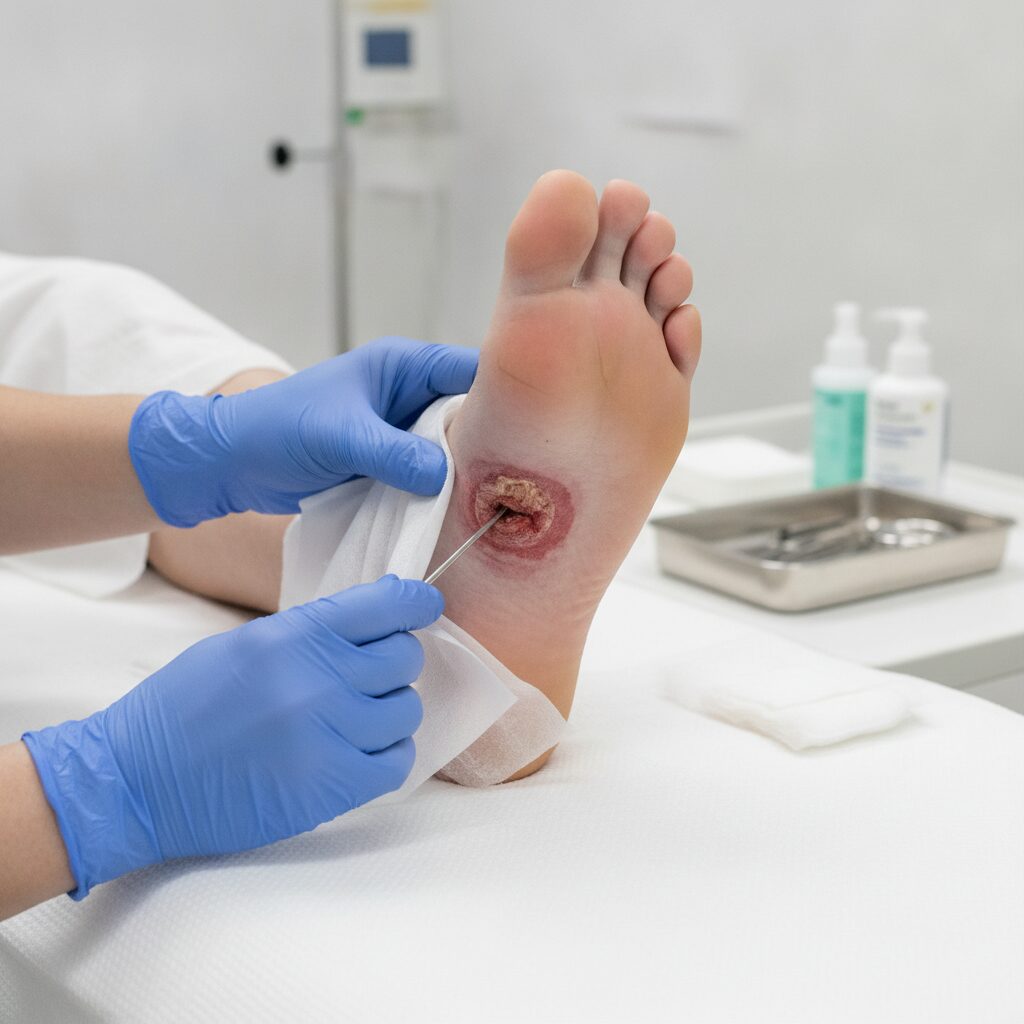
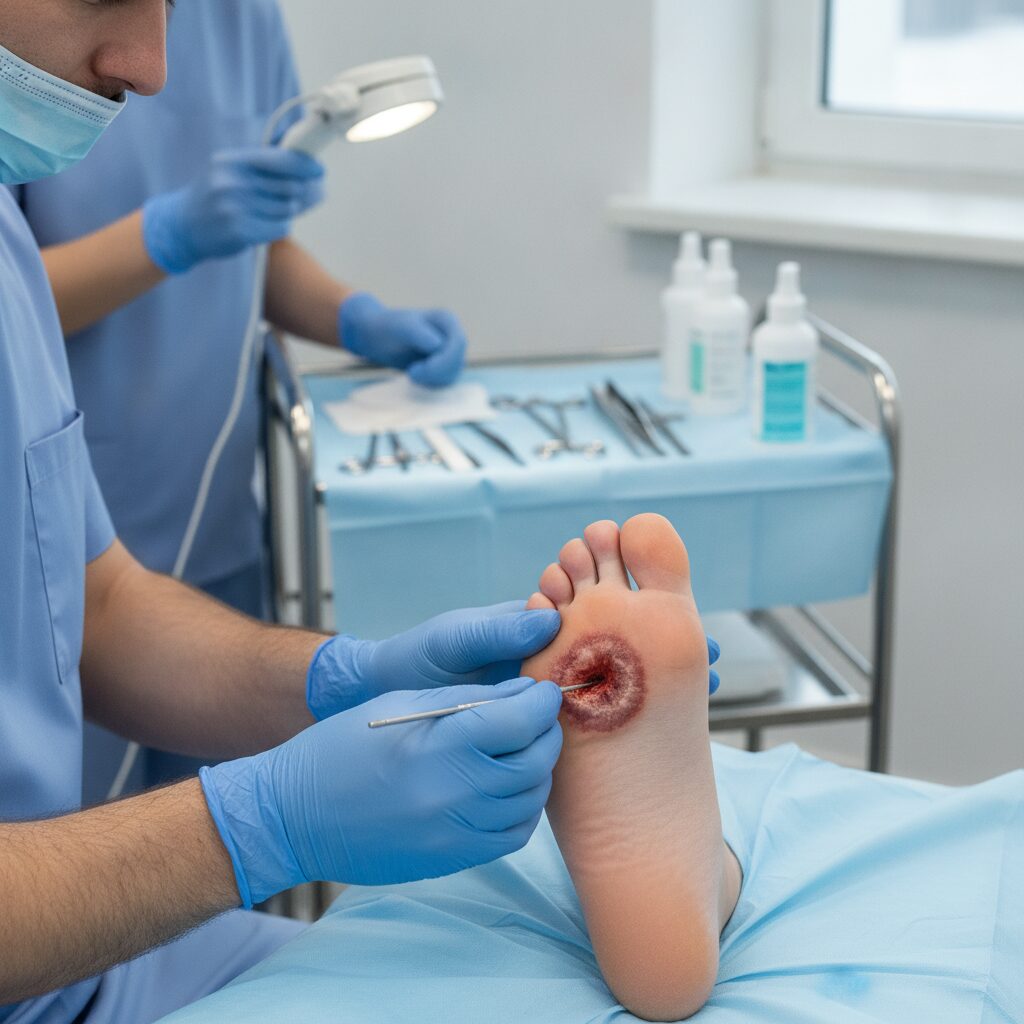
---<h1 id=wagner-and-pedis-classification-of-diabetic-foot-ulcers-staging-and-significance>Wagner and PEDIS Classification of Diabetic Foot Ulcers: Staging and Significance</h1><p><em>Author: Prof. Dr. Aytaç Çetinkaya · Medically reviewed by: Prof. Dr. Aytaç Çetinkaya · Updated: 2026-06-19</em></p><h2 id=short-answer>Short Answer</h2><p>Diabetic foot ulcer staging determines the treatment plan and urgency by standardizing the assessment of wound depth, infection, and circulation. The <strong>Wagner classification</strong> provides a rapid <strong>diabetic foot assessment</strong> focused primarily on depth and gangrene; the <strong>PEDIS classification</strong>, on the other hand, evaluates perfusion, area, depth, infection, and sensory loss collectively.</p><p>Diabetic foot ulcers can progress across a broad spectrum, ranging from a small skin crack to severe infection and gangrene. Therefore, simply stating that “there is a wound” is not sufficient on its own; the <strong>stage</strong> of the wound, the severity of the infection, and the status of blood flow to the foot (ischemia/perfusion) determine the course of treatment. The two most commonly used approaches in clinical practice are the <strong>Wagner classification</strong> and the <strong>PEDIS classification</strong>. These two systems make “diabetic foot stages” easier to understand and facilitate communication among teams: the endocrinology, infectious disease, orthopedics, general surgery, vascular surgery, and wound care teams treating the same patient all speak the same language. In this article, you’ll find a patient-friendly yet detailed explanation of the logic behind <strong>diabetic foot ulcer staging</strong>, what the Wagner and PEDIS systems measure, the clinical significance of the stages, and when you should seek emergency care.</p><h2 id=why-is-diabetic-foot-ulcer-staging-important>Why is diabetic foot ulcer staging important?</h2><p>Diabetic foot ulcer staging is important because it determines the risk associated with the ulcer and establishes the priority for treatment. Two wounds that appear to be the same size may differ significantly: one might be superficial in a well-perfused area, while the other may have progressed to the bone or tendon level or involve impaired circulation; this difference fundamentally alters the healing time and the risk of complications.</p><p>Staging and <strong>diabetic foot grading</strong> are directly useful in the following areas:</p><ul><li><strong>Need for urgent intervention:</strong> If there is suspicion of widespread infection, rapidly progressing cellulitis, gangrene, or critical ischemia, evaluation must be performed on the same day.</li><li><strong>Testing plan:</strong><ul><li>For circulation: foot pulses, Doppler ultrasound, ABI/TBI measurements</li><li>For suspected bone involvement: plain X-ray, MRI if necessary</li></ul></li><li><strong>Treatment components:</strong> pressure relief (offloading), debridement, appropriate dressings, infection control, blood sugar optimization, and vascular interventions if necessary.</li><li><strong>Follow-up frequency:</strong> The follow-up intervals for mild superficial wounds are not the same as those for deep, infected, or ischemic wounds.</li><li><strong>Documentation and communication:</strong> Terms such as “Wagner 3” or “PEDIS: P2 E1 D2 I2 S1” provide the healthcare team with concise yet powerful information.</li></ul><p>A practical example: A person who cannot feel pain due to neuropathy may not notice a wound on their foot until it is too late. In this case, staging helps distinguish whether it is “just a wound” or “infection + circulatory impairment.” If you suspect neuropathy, you may also want to check out this content: <a href=/useful-information/foot-ulcers-and-nerve-damage-symptoms-in-diabetes/>Foot Ulcers and Nerve Damage Symptoms in Diabetes: How to Recognize Neuropathy?</a></p><p><img src=/images/blog/diyabetik-ayak-yaralarinda-wagner-ve-pedis-siniflandirmasi-1.jpg alt="Diabetic foot ulcer staging chart and risk indicators"></p><h2 id=what-is-the-wagner-classification-and-how-are-diabetic-foot-stages-defined-according-to-wagner>What is the Wagner classification, and how are diabetic foot stages defined according to Wagner?</h2><p>The <strong>Wagner classification</strong> is a practical system that grades diabetic foot ulcers on a scale from 0 to 5, based primarily on <strong>wound depth</strong>, tissue loss, and the presence of <strong>gangrene/necrosis</strong>. People searching for a “Wagner classification table” generally want to see a quick summary and learn what each stage means.</p><p>The table below summarizes the <strong>stages of diabetic foot ulcers</strong> according to Wagner:</p><table><thead><tr><th>Wagner Grade</th><th>Definition (summary)</th><th>Clinical significance (general)</th></tr></thead><tbody><tr><td><strong>0</strong></td><td>No open ulcer; high-risk foot (calluses, deformities, neuropathy, etc.)</td><td>Protection and prevention are critical; proper footwear/insoles, daily monitoring</td></tr><tr><td><strong>1</strong></td><td>Superficial ulcer (limited to the skin)</td><td>High chance of healing with pressure relief + appropriate wound care</td></tr><tr><td><strong>2</strong></td><td>Deep ulcer (may extend to deep tissues such as tendons or joint capsules)</td><td>May be accompanied by infection or ischemia; closer monitoring is required</td></tr><tr><td><strong>3</strong></td><td>Deep ulcer + suspected or confirmed abscess/osteomyelitis</td><td>Imaging, culture, debridement, and systemic treatment may be indicated</td></tr><tr><td><strong>4</strong></td><td>Localized gangrene (limited area such as a toe or forefoot)</td><td>Urgent assessment of circulation is required; high risk of tissue loss</td></tr><tr><td><strong>5</strong></td><td>Extensive gangrene (most of the foot)</td><td>Life- or limb-threatening condition; an urgent multidisciplinary approach is required</td></tr></tbody></table><p>The term <strong>Wagner classification of diabetic foot</strong> is the English equivalent used in searches for the same condition; the clinical content is based on the same logic.</p><h3 id=what-are-the-strengths-and-weaknesses-of-the-wagner-classification>What are the strengths and weaknesses of the Wagner classification?</h3><p>The <strong>Wagner classification</strong> is a strength because it is quick and easy to understand; however, it may not provide the full picture on its own. Specifically:</p><ul><li><strong>Strength:</strong> It clarifies the depth and extent of gangrene; it provides rapid decision support at the bedside.</li><li><strong>Limitation:</strong> It does not separately and in detail grade the severity of infection and circulatory impairment (ischemia/perfusion). For this reason, many centers use the Wagner classification in conjunction with more comprehensive systems.</li></ul><p>Detailed information for individuals with suspected gangrene: <a href=/useful-information/diabetic-foot-gangrene-symptoms-stages-and-treatment/>Diabetic Foot Gangrene: Symptoms, Stages, and Non-Amputation Treatment Options</a></p><h2 id=what-is-the-pedis-classification-and-how-is-it-applied>What is the PEDIS classification, and how is it applied?</h2><p>The <strong>PEDIS classification</strong> offers a more comprehensive approach to <strong>diabetic foot ulcer staging</strong> by evaluating diabetic foot ulcers across five dimensions. PEDIS takes its name from the following components: <strong>P</strong>erfusion (blood flow), <strong>E</strong>xtent (area), <strong>D</strong>epth, <strong>I</strong>nfection, <strong>S</strong>ensation (sensation).</p><p>The purpose of PEDIS is to report the key factors that determine healing collectively, rather than focusing solely on “the depth of the wound.” It can be particularly helpful in guiding treatment planning for patients with infection and circulation issues.</p><h3 id=what-does-the-acronym-pedis-stand-for>What does the acronym PEDIS stand for?</h3><p>The acronym PEDIS directly refers to the five categories assessed:</p><ul><li><strong>P – Perfusion:</strong> Is blood flow to the foot adequate? Is there ischemia?</li><li><strong>E – Extent:</strong> How large is the wound area (width)?</li><li><strong>D – Depth:</strong> How deep does the wound extend into the tissue layers?</li><li><strong>I – Infection:</strong> Is there an infection, and if so, is it mild, moderate, or severe?</li><li><strong>S – Sensation:</strong> Is there a loss of protective sensation (neuropathy)?</li></ul><h3 id=how-is-the-pedis-assessment-performed-step-by-step>How is the PEDIS assessment performed step by step?</h3><p>The PEDIS assessment is based on scoring each component separately and interpreting them together. In practice, clinics follow this sequence:</p><ol><li><strong>Perfusion assessment:</strong> Foot pulses, skin temperature/color, capillary refill; Doppler and ABI/TBI if necessary.</li><li><strong>Wound extent:</strong> Recorded through measurement; the goal is to reduce the size during follow-up.</li><li><strong>Depth:</strong> Is it superficial, or does it extend to tendons, joints, or bone?</li><li><strong>Infection:</strong> Local signs (redness, increased heat, discharge) and systemic signs (fever, chills, altered general condition) are assessed.</li><li><strong>Sensation:</strong> Tests such as the monofilament test are used to determine whether there is a loss of protective sensation.</li></ol><h3 id=what-do-the-pedis-infection-grades-mean-in-practice>What do the PEDIS infection grades mean in practice?</h3><p>PEDIS infection grades help describe not only the “presence or absence” of infection but also its <strong>severity</strong>. Generally:</p><ul><li><strong>Mild:</strong> Limited redness around the wound and signs of superficial infection.</li><li><strong>Moderate:</strong> Cellulitis spreading to a wider area, with suspicion of deeper tissue involvement.</li><li><strong>Severe:</strong> Signs of systemic involvement (such as fever, tachycardia, hypotension) or rapidly progressing spread.</li></ul><p>This classification helps the physician more clearly frame decisions such as “home care + close monitoring” versus “emergency admission/IV treatment + surgical evaluation.”</p><p><img src=/images/blog/diyabetik-ayak-yaralarinda-wagner-ve-pedis-siniflandirmasi-2.jpg alt="PEDIS classification components: Perfusion, area, depth, infection, sensation"></p><h2 id=wagner-vs-pedis-which-one-to-use-when>Wagner vs. PEDIS: Which One to Use When?</h2><p><strong>Comparing Wagner and PEDIS</strong> helps determine which information is more critical for which patient. In short: While the <strong>Wagner classification</strong> offers a rapid assessment focused on depth and gangrene, the <strong>PEDIS classification</strong> uses a multidimensional evaluation to highlight infection and circulation issues in particular.</p><p>The table below provides a practical summary of the differences between the two approaches:</p><table><thead><tr><th>Heading</th><th>Wagner Classification</th><th>PEDIS Classification</th></tr></thead><tbody><tr><td>Focus</td><td>Depth, necrosis/gangrene</td><td>Perfusion + area + depth + infection + sensation</td></tr><tr><td>Use</td><td>Rapid bedside “diabetic foot stages” assessment</td><td>Detailed documentation, treatment plan, and follow-up criteria</td></tr><tr><td>Infection/Ischemia</td><td>Indirectly reflected, limited detail</td><td>Assessed as separate dimensions</td></tr><tr><td>Communication</td><td>Short, e.g., “Wagner 2/3/4”</td><td>More comprehensive reporting using “P/E/D/I/S”</td></tr></tbody></table><h3 id=is-it-possible-to-use-them-together-in-daily-clinical-practice>Is it possible to use them together in daily clinical practice?</h3><p>Yes, many teams use the <strong>“Wagner + PEDIS”</strong> approach together in practice. For example, while Wagner quickly describes the depth and gangrene extent of a wound, PEDIS standardizes the severity of blood flow and infection for the same wound. This makes it easier to understand why treatment changes, particularly in “diabetic foot ulcer staging” reports.</p><h3 id=what-are-the-main-components-of-the-general-approach-based-on-stage>What are the main components of the “general approach” based on stage?</h3><p>Regardless of the stage, diabetic foot ulcer management generally relies on the following key pillars:</p><ul><li><strong>Offloading:</strong> Even the best dressing may be insufficient if pressure on the wound continues.</li><li><strong>Wound care and debridement:</strong> Removing necrotic tissue and selecting an appropriate dressing accelerates healing.</li><li><strong>Infection control:</strong> If infection is suspected, evaluation must be performed without delay.</li><li><strong>Assessment of circulation:</strong> Wound healing is difficult if ischemia is present; a vascular evaluation is planned.</li><li><strong>Blood sugar control:</strong> This affects the capacity for healing; HbA1c and daily monitoring are important.</li></ul><p>To read more about the impact of blood sugar control on healing: <a href=/useful-information/blood-sugar-control-and-diabetic-foot-ulcer-healing/>Blood Sugar Control and Diabetic Foot Ulcer Healing: Why Is HbA1c Important?</a></p><h3 id=when-is-an-urgent-evaluation-required>When is an urgent evaluation required?</h3><p>If the following “red flags” are present, a diabetic foot ulcer must be evaluated <strong>urgently</strong>:</p><ul><li>Rapidly spreading redness/swelling, increased heat, foul-smelling discharge</li><li>Systemic symptoms such as fever, chills, or marked weakness</li><li>Bluish discoloration of the foot, marked coldness, or increased pain at rest (suspected critical ischemia)</li><li>Blackened tissue (gangrene) or rapidly expanding necrosis</li><li>Visible bone or a “bony sensation” (suspected osteomyelitis)</li></ul><h2 id=suggested-internal-links>Suggested Internal Links</h2><ul><li><a href=/useful-information/diabetes-and-diabetic-foot-which-doctor-and-department-to-visit/>Which Doctor and Department Should You Visit for Diabetes and Diabetic Foot?</a></li><li><a href=/useful-information/gangrene-in-the-diabetic-foot-symptoms-stages-and-treatment/>Gangrene in the Diabetic Foot: Symptoms, Stages, and Treatment Options Without Amputation</a></li><li><a href=/useful-information/how-to-choose-diabetic-shoes-and-insoles/>How to Choose Diabetic Shoes and Insoles: A Foot Care Guide for People with Diabetes</a></li><li><a href=/useful-information/diabetic-foot-care-a-guide-to-daily-prevention-at-home/>Diabetic Foot Care: A Guide to Daily Prevention at Home (Nail, Callus, and Foot Checks)</a></li><li><a href=/useful-information/symptoms-of-foot-numbness-and-nerve-damage-in-diabetes/>Symptoms of Foot Numbness and Nerve Damage in Diabetes: How to Recognize Neuropathy?</a></li><li><a href=/useful-information/foot-swelling-and-edema-in-diabetes-causes-and-treatment/>Foot Swelling and Edema in Diabetes: Causes, Symptoms, and Treatment</a></li><li><a href=/useful-information/blood-sugar-control-and-diabetic-foot-wound-healing/>Blood Sugar Control and Diabetic Foot Wound Healing: Why Is HbA1c Important?</a></li></ul><blockquote><p>Bu içerik yalnızca bilgilendirme amaçlıdır. Site içeriğinde bulunan bilgiler destek sağlamak içindir; hekimin hastasını tıbbi amaçla muayene etmesi, tanı ve teşhis koyması yerine geçmez. Sağlığınızla ilgili kararlar için lütfen bir hekime danışın.</p></blockquote>---
📍 **Kaynak:** https://aytaccetinkaya.com/en/health-articles/wagner-and-pedis-classification-of-diabetic-foot-ulcers/index.md
👨‍⚕️ **Yazar:** Prof. Dr. Aytaç Çetinkaya
📅 **Tarih:** 19 June 2026
🏥 **İletişim:** +90-545-450-5427