
Author: Prof. Dr. Aytaç Çetinkaya · Medically reviewed by: Prof. Dr. Aytaç Çetinkaya · Updated: 2026-06-19
Short Answer
Diabetic foot care involves visually inspecting your feet every day, washing them briefly with lukewarm water and drying them thoroughly, moisturizing them properly, trimming your toenails straight across, and relieving pressure without cutting calluses. If you notice redness, swelling, increased warmth, discharge, a foul odor, or blackening, you should see a doctor immediately.
Foot care in diabetes should be a daily habit to prevent even a small crack or abrasion from quickly turning into a “diabetic foot ulcer.” This is because diabetes can lead to nerve damage (neuropathy) and circulation problems over time, increasing the risk of loss of sensation in the feet, dry skin, slow healing, and infection. Therefore, the answer to the question “How do you protect your feet from diabetes?” lies in combining regular foot checks, proper shoe and sock selection, safe nail trimming, and callus and hard skin management. In this guide, you’ll find a practical, step-by-step daily routine you can follow at home to answer the question of how to care for your feet if you have diabetes. Especially in high-risk areas such as diabetic foot nail care and callus management, knowing “what not to do” is just as critical as knowing “what to do.”
Why is diabetic foot care so important?
Diabetic foot care is important because loss of sensation and poor circulation can cause a minor irritation to go unnoticed and worsen, increasing the risk of infection. When diabetic neuropathy develops, pain in the feet may decrease; this is not a “good” sign—it’s a warning sign—because friction, pressure, or burns may go unnoticed for a long time.
Key reasons why foot care must be meticulous in people with diabetes:
- Reduced sensation (neuropathy): Blisters, stones in the shoe, or water blisters may go unnoticed.
- Impaired circulation: Tissue nourishment decreases; wounds may heal more slowly.
- Dry skin and cracks: Entry points such as cracked heels increase the risk of infection.
- Pressure points and calluses: Calluses may signal the development of a “hidden wound” beneath the skin.
- Risk of rapid infection progression: Redness, increased heat, discharge, and foul odor should be taken seriously.
Additionally, blood sugar control is a key factor in wound healing and infection risk. If you’d like to explore this topic further, the following article provides guidance: Blood Sugar Control and Diabetic Foot Wound Healing: Why Is HbA1c Important?
Daily Goal: The goal of a diabetic foot prevention approach is to detect risky changes “before a wound develops.”
How Is Foot Care Performed in People with Diabetes (Daily Home Care Routine)?
Foot care for people with diabetes at home consists of a brief check performed at the same time every day, along with safe cleaning, drying, and proper moisturizing. This routine is the most effective answer to the question of how to protect against diabetic foot problems by making “diabetic foot checks” a permanent habit.
How to Perform a 3–5-Minute Daily Foot Check?
The daily foot check aims to detect early signs—such as redness, cracks, blisters, or sores—by examining the entire surface of the foot, including the soles, under good lighting.
Step-by-step checklist (using a mirror):
- Lighting and position: Sit in a well-lit area. Use a mirror to see the soles of your feet, or ask a family member or friend for help.
- Top of the foot and ankle: Check for any discoloration, scratches, or signs of friction.
- Between the toes: Check for moisture, whitening (maceration), odor, cracks, or signs of a fungal infection.
- Sole and heel: Examine for cracks, hardening, calluses, blisters, or cuts.
- Temperature and swelling comparison: Compare both feet using the back of your hand; unilateral increase in temperature or swelling may be a warning sign.
- Discharge/odor check: Note any stains, leakage, or foul odor on the sock.
If any of the following findings are present, schedule an evaluation for the same day instead of adopting a “wait-and-see” approach:
- Open wound, bleeding, blister
- Rapidly increasing redness or swelling
- Increased warmth, foul odor, discharge
- Bruising/blackening
How should you wash and dry your feet?
Washing your feet aims to clean the skin without causing irritation; drying aims to reduce the risk of fungal infections and cracks, especially between the toes.
- Water should be lukewarm: Very hot water increases the risk of burns (which may go unnoticed if sensation is lost).
- Keep it brief: Soaking for too long can soften the skin and make it prone to cracking.
- Use a mild soap: Perfumed or harsh ingredients can increase dryness.
- Make sure to dry thoroughly: The spaces between the toes, in particular, must remain completely dry; pat dry with a soft towel.
How to Apply Moisturizer (Cream) Correctly?
Moisturizing is effective in reducing diabetic foot cracks, cracked heels, and dry skin; however, applying it incorrectly can pose risks.
- Apply the cream in a thin layer to the soles and heels.
- Do not apply cream between the toes; a moist environment can lead to fungal infections and skin damage.
- For very dry and hard skin, options such as urea-based cream may be considered upon the recommendation of a doctor or pharmacist; discontinue use if irritation occurs.
How to Care for Diabetic Toenails (Safe Nail Trimming)?
Diabetic foot nail care aims to trim the nails without increasing the risk of ingrown nails or cuts; the safest method is to trim the nails straight across and avoid cutting the corners too deeply. Among foot care practices for people with diabetes, nail trimming is the step most likely to lead to “small but serious” problems.
How to Trim Toenails in People with Diabetes?
The goal of toenail trimming for people with diabetes is to trim the nails without injuring the skin, cutting the edges too deep, or cutting them too short.
Safe nail-trimming steps:
- Timing: It may be easier to trim your nails after a shower when they’re slightly softened; however, don’t over-soften the skin, as this increases the risk of careless trimming.
- Cutting technique: Cut the nails straight. Round the corners without cutting too deep.
- Length: Do not cut them too short; the tip of the nail can extend slightly past the fingertip.
- Filing: File down any sharp edges to reduce the risk of snagging and tearing.
- If you have difficulty seeing: Ask for help if it’s hard to bend over to cut your nails or if you have vision problems.
What should you do if you suspect a thickened nail, nail fungus, or an ingrown toenail?
If you suspect a thickened nail or diabetic foot nail fungus, do not perform procedures such as “scraping, peeling, or deep cutting” at home. Such interventions can increase the risk of bleeding and infection.
Professional evaluation is safer in the following situations:
- Noticeable thickening, yellowing, or crumbling of the nail
- Redness, swelling, or discharge around the nail (signs of an ingrown nail or infection)
- Frequent skin cuts while trimming the nail
- Persistent tenderness around the nail
The following content can help you determine which department to visit: Which Doctor and Department Should You See for Diabetes and Diabetic Foot?
Is a home pedicure or a pedicure at a salon safe for diabetic feet?
A pedicure can be risky for diabetic feet if performed with cutting tools; sterilization issues and deep cuts or skin removal can create an entry point for infection. If you do decide to get a pedicure, you should choose a center that specializes in medical foot care for people with diabetes and avoid any cutting procedures.
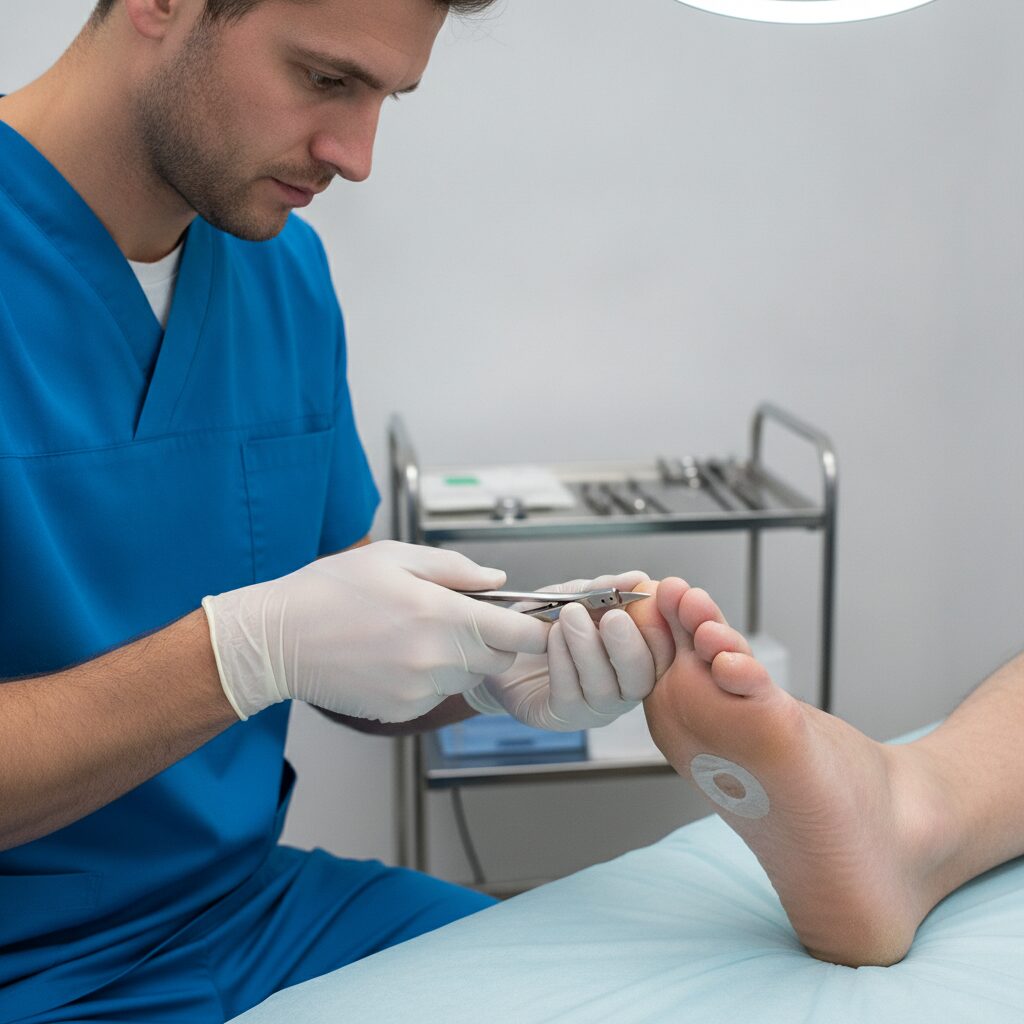
How to manage diabetic foot calluses (what to do and what not to do at home)?
Diabetic foot callus management is based on reducing pressure and safely softening the skin, rather than cutting the callus. This is because calluses are often the result of ill-fitting shoes, pressure points, or issues with gait biomechanics; there may be skin damage or even the onset of an ulcer beneath the callus.
Why can calluses be dangerous on diabetic feet?
A callus is a thickening of the skin in an area exposed to pressure; in a diabetic foot, microbleeds and tissue damage can develop beneath this thick layer. If there is a loss of sensation, the problem can worsen because the person does not feel pain. For this reason, in a “diabetic foot prevention” approach, calluses are a warning sign that must be taken seriously.
What can be done at home for calluses on a diabetic foot?
Home care should be limited to supportive measures that do not break the skin or cause chemical irritation.
Safe options:
- Reduce pressure: Identify the point where the shoe is rubbing; stop wearing shoes with narrow toes or hard inner surfaces.
- Check the inside of your shoes daily: Look for seams, creases, or any stones or hard objects.
- Moisturize: Apply cream regularly to the heels and hardened areas (excluding the spaces between the toes).
- Gently use a pumice stone (with great care): If your doctor approves, you can use a very light touch with a pumice stone after a warm shower; the goal is to “thicken” the skin, not to cause bleeding. Stop immediately if you experience redness or a burning sensation.
Shoe selection plays a key role in callus and pressure management. Detailed guide on this topic: How to Choose Diabetic Shoes and Insoles? A Foot Care Guide for People with Diabetes
What should you avoid doing at home for calluses on diabetic feet?
Certain practices for treating calluses on diabetic feet directly increase the risk of wounds and infection; therefore, they should be avoided:
- Cutting calluses with a razor, knife, or scissors
- Using chemical callus patches or solutions (especially products containing salicylic acid, which can burn the skin)
- Attempting to “peel off” or “scrape away” the callus
- Frequent use of irritating antiseptics (unnecessary use can damage the skin)
Daily “Do’s and Don’ts” Summary (table)
The table below quickly summarizes the most common points of confusion when performing diabetic foot care at home:
| Topic | Do’s | Don’ts |
|---|---|---|
| Daily Check | Check the soles, heels, and between the toes with a mirror | Skipping the check because “I don’t feel any pain” |
| Washing | Lukewarm water, short duration, mild soap | Soaking in hot water, using a heating pad or hot water bottle |
| Drying | Thoroughly dry between the toes | Leaving them damp, scrubbing too hard |
| Moisturizing | Apply a thin layer to the heel and sole | Applying cream between the toes |
| Nails | Cut straight across, file | Cut the corners too deep, cut them too short |
| Calluses | Reduce pressure, gently soften | Cut with a razor, use chemical callus strips |
Which symptoms in a diabetic foot require an “emergency” or “same-day” visit to the doctor?
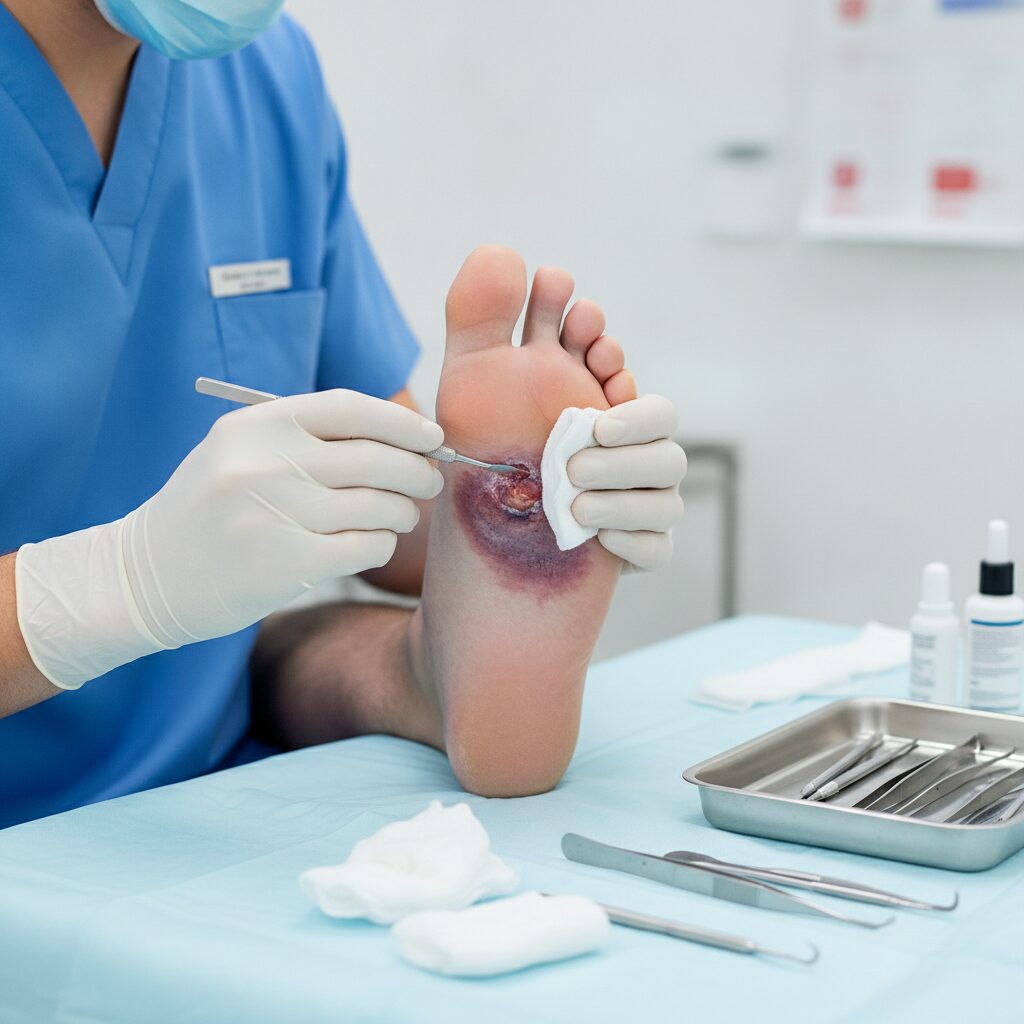
Certain signs in a diabetic foot do not allow for any delay in terms of infection or circulation issues; a same-day medical evaluation is required. In particular, symptoms such as a foul odor, discharge, rapidly spreading redness, and blackening are “red flags” among diabetic foot symptoms.
Conditions requiring same-day medical attention:
- A new open wound, blister, or bleeding
- Discharge, pus, or a foul odor
- Rapidly increasing redness, swelling, or increased warmth
- A new, noticeable change in the shape of the foot or an inability to bear weight on it
Conditions that may require urgent evaluation:
- Bruising or blackening of a toe or foot
- Fever, chills, or general malaise accompanied by widespread redness
- Severe pain (even if due to neuropathy) or a sudden increase in loss of sensation
For more comprehensive information on the risk of blackening and tissue loss: Diabetic Foot Gangrene: Symptoms, Stages, and Treatment Options Without Amputation
Internal Link Suggestions
- Which Doctor and Department Should You See for Diabetes and Diabetic Foot?
- Gangrene in the Diabetic Foot: Symptoms, Stages, and Treatment Options Without Amputation
- How to Choose Diabetic Shoes and Insoles: A Foot Care Guide for People with Diabetes
- Symptoms of Foot Numbness and Nerve Damage in Diabetes: How to Recognize Neuropathy?
- Foot Swelling and Edema in Diabetes: Causes, Symptoms, and Treatment
- Blood Sugar Control and Diabetic Foot Ulcer Healing: Why Is HbA1c Important?
- Wagner and PEDIS Classification of Diabetic Foot Ulcers: Staging and Significance
This content is for informational purposes only. The information on this site is meant to support you; it does not replace a physician's medical examination, diagnosis or treatment. Please consult a doctor for decisions about your health.