

Author: Prof. Dr. Aytaç Çetinkaya · Medically reviewed by: Prof. Dr. Aytaç Çetinkaya · Updated: 2026-06-19
Short Answer
Diabetic foot gangrene is the death of foot tissue, usually caused by blocked blood vessels (ischemia) and/or infection. If detected early, the risk of amputation can be reduced through measures such as improving circulation (angioplasty/bypass), controlling infection, removing dead tissue (debridement), reducing pressure, and advanced wound care; rapidly progressing blackening, a foul odor, or fever are medical emergencies.
In daily practice, when we refer to “diabetic foot gangrene,” it is rarely a simple wound; a more serious condition characterized by impaired tissue viability, reduced blood flow, and potential infection. Diabetes can lead to delayed detection of wounds due to nerve damage (neuropathy) that reduces pain sensation; and vascular disease can prevent the oxygen needed for wound healing from reaching the tissues. As a result, even a small blister, ingrown toenail, or callus can rapidly progress to tissue loss in the diabetic foot and gangrene.
In this article, we will address questions such as “How is toe gangrene recognized?,” “How are the stages of gangrene assessed in a clinical setting?,” “Can gangrene of the foot heal?,” and the most frequently asked question, “Is treatment for gangrene in diabetes possible without amputation?” within an evidence-based and realistic framework. You’ll also find practical checklists and warning signs for when to seek immediate medical attention regarding the question, “How can diabetic foot amputation be prevented?”
What Is Diabetic Foot Gangrene and What Causes It?
Diabetic foot gangrene is a condition in which tissue in the foot or toes undergoes irreversible death (necrosis) as a result of a severe reduction in blood flow and/or infection. Diabetic foot gangrene does not mean that “every diabetic foot wound is gangrene”; gangrene is a more advanced and high-risk end point.
The main mechanisms that facilitate the development of gangrene in diabetes are as follows:
- Peripheral artery disease (vascular blockage): Oxygen cannot reach the tissue; wound healing becomes difficult, and tissue death occurs more easily.
- Diabetic neuropathy: Due to numbness, the patient may not notice trauma; friction from shoes, burns, or small cuts can worsen.
- Susceptibility to infection: High blood sugar can weaken the immune response; infections can progress more rapidly.
- Pressure and deformity: Calluses, ill-fitting shoes, and foot deformities place excessive pressure on specific areas.
What is the difference between dry gangrene, wet gangrene, and gas gangrene?
Dry gangrene is typically characterized by ischemia (reduced blood flow), while wet gangrene is characterized by a prominent infection. Although gas gangrene is rarer, it is a rapidly progressing, life-threatening infection.
| Type of gangrene | Most common cause | Typical appearance/clues | Urgency |
|---|---|---|---|
| Dry gangrene | Vascular occlusion (ischemia) | Dry, black-brown, shriveled tissue; sometimes minimal discharge | High (vascular evaluation required) |
| Wet gangrene | Infection + tissue death | Swelling, discharge, foul odor, redness/increased warmth in the surrounding area | Very high (risk of sepsis) |
| Gas gangrene | Rapid tissue destruction caused by certain bacteria | Severe pain, rapid deterioration, possible sensation of gas under the skin | Emergency (life-threatening) |
The evaluation of a patient with suspected gangrene of the diabetic foot is often conducted in a multidisciplinary manner: teams from endocrinology, vascular surgery, infectious diseases, orthopedics/plastic surgery, and wound care may collaborate on the treatment plan.
What are the symptoms of gangrene in the diabetic foot?
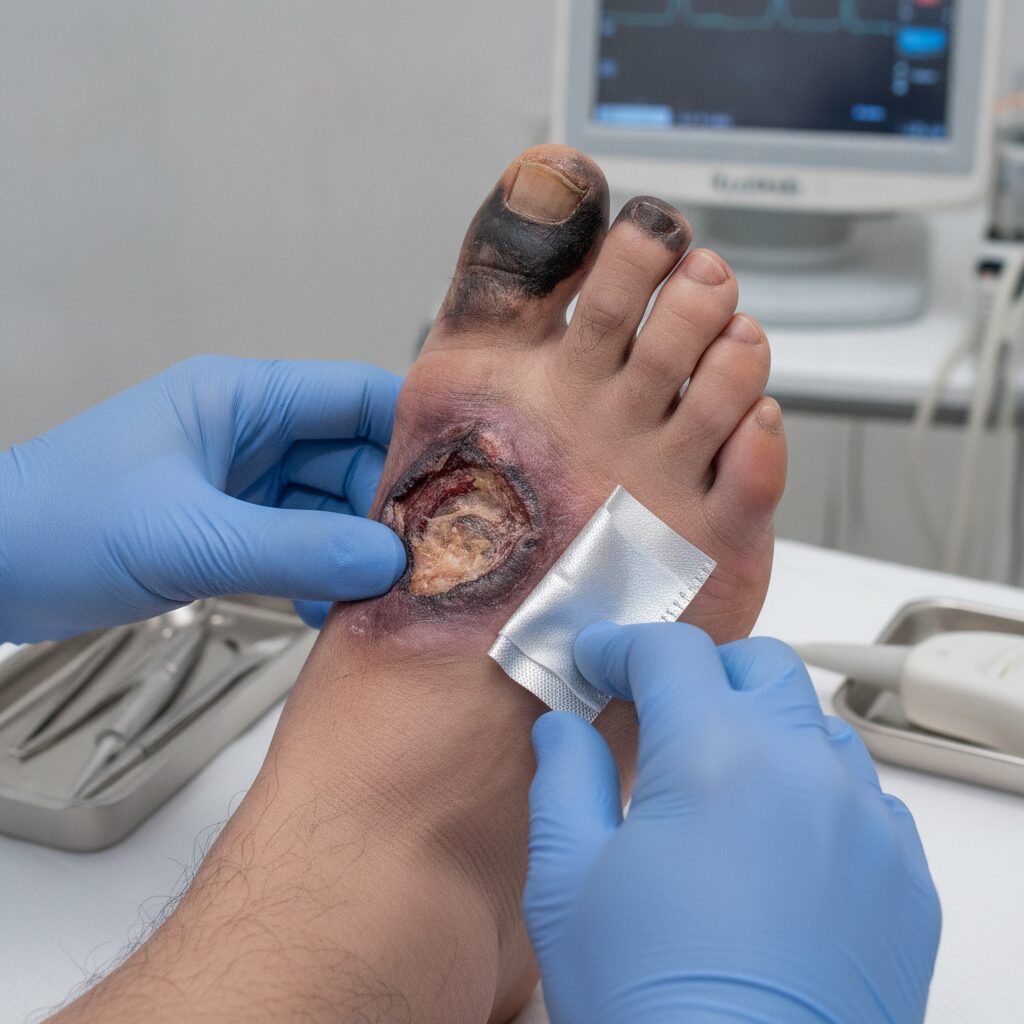
Symptoms of gangrene in the diabetic foot most commonly manifest as color changes + loss of tissue vitality + signs of infection . Recognizing these early warning signs is the most critical factor in determining whether a gangrenous foot can heal, because early medical attention reduces the risk of amputation.
Signs of gangrene in diabetic feet (checklist)
If even one of the following signs is present, a medical evaluation is required without delay:
- Blackening / dark bruising: Especially at the tips of the toes or on the heel
- Coldness and pallor: Noticeable coldness and loss of color compared to the other foot
- Rapidly increasing swelling and redness: Suggests infection
- Foul odor and discharge: Suggests wet gangrene or a deep infection
- Darkening at the edges of the wound, appearance of tissue decay
- Rest pain or pain that worsens at night: May be a sign of ischemia (pain may be absent if neuropathy is present)
- Fever, chills, fatigue: Systemic effects of infection (emergency)
- Numbness in the foot + new wound: Combination of neuropathy and trauma
What are the symptoms of toe gangrene?
Toe gangrene often starts out as a “minor issue” but can progress rapidly. The most typical symptoms are:
- A transition from bluish discoloration → blackening at the tip of the toe
- Numbness in the toe or a sensation of “foreignness” upon touch
- A wound or infection around the nail that does not heal
- Drying and shriveling of the toe (dry gangrene) or discharge and odor (wet gangrene)
Which symptoms require emergency care?
The following may require same-day emergency evaluation rather than “home monitoring”:
- Rapidly spreading bluish discoloration/blackening
- Foul odor, pus-like discharge, rapidly increasing redness in the surrounding area
- Systemic symptoms such as fever, confusion, or low blood pressure
- Noticeable coldness in the foot + severe pain (acute circulatory problem)
Since diabetic foot neuropathy may be present, the belief that “if there’s no pain, it’s not serious” is incorrect. The following content may be helpful for those with suspected neuropathy: Symptoms of Foot Numbness and Nerve Damage in Diabetes: How to Recognize Neuropathy?
How are the stages of gangrene assessed, and when is “amputation-free treatment” possible?
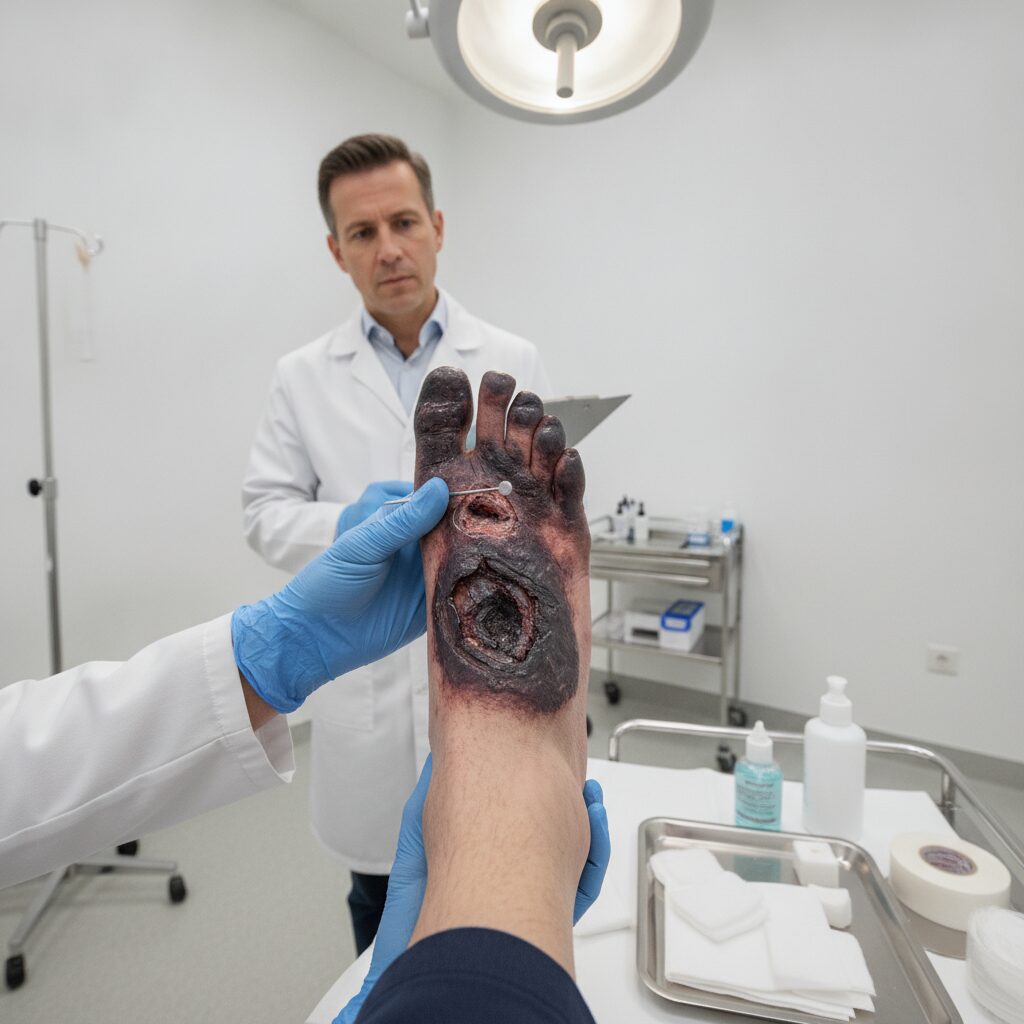
Gangrene stages are not classified solely as “mild, moderate, or severe”; in clinical practice, risk is determined by evaluating wound depth (tissue loss) + ischemia (blood flow) + infection together. This approach allows for the realistic planning of “non-amputation” options in patients with tissue loss in the diabetic foot.
What is the purpose of classifications such as Wagner, Texas, and WIfI?
These classifications help predict the severity of a diabetic foot ulcer and the risk of amputation:
- Wagner classification: Focuses primarily on wound depth and the presence of gangrene.
- University of Texas (Texas) classification: In addition to depth, it also considers the factors of infection and ischemia.
- WIfI (Wound/Ischemia/Foot Infection): By scoring the wound, ischemia, and infection separately, it helps assess the risk of limb loss and the likelihood of benefiting from revascularization.
If you’d like to learn more about the staging logic: Wagner and PEDIS Classification of Diabetic Foot Ulcers: Staging and Meaning
Can a gangrenous foot heal?
The answer to the question “Can a gangrenous foot heal?” is conditional: If viable tissue can be preserved, circulation can be restored, and the infection can be brought under control, the chances of healing increase significantly. However, the risk increases in cases such as delayed presentation, widespread infection, severe vascular occlusion, or concomitant kidney failure.
Key factors affecting healing:
- Level of circulation: Patency of the foot’s blood vessels, suitability for revascularization
- Depth of infection: Presence of bone infection (osteomyelitis), for example
- Blood sugar control: Closely related to wound healing (HbA1c monitoring is important)
- Off-loading: Healing is delayed if pressure continues to be applied to the wound
- Smoking: Negatively affects vascular health and wound healing
Content detailing the relationship between blood sugar control and healing: Blood Sugar Control and Diabetic Foot Wound Healing: Why Is HbA1c Important?
Gangrene treatment in diabetes: What are the non-amputation options?
There is no “single method” for treating gangrene in diabetes; a non-amputation approach is often possible by applying several steps simultaneously in the correct order. The goal is to stop the infection and improve circulation while preserving as much healthy tissue as possible.
1) How is circulation restored (revascularization)?
Revascularization involves opening blocked or narrowed blood vessels to increase blood flow to the foot. The most common methods are:
- Endovascular procedures (angioplasty/balloon, stenting): The narrowing can be widened by accessing the vessel through the groin or below the knee.
- Bypass surgery: Blood flow can be restored by “bridging” the blocked segment.
The appropriate method is determined by a vascular surgeon based on the location and extent of the blockage, the patient’s overall condition, and the structure of the blood vessels.
2) Why is infection control critical?
If an infection is present, the cornerstone of treatment consists of surgical interventions such as culture collection, appropriate antibiotic selection, and, if necessary, abscess drainage. Since infection can progress rapidly in gangrene, any delay increases the risk of sepsis.
3) What does debridement (removal of dead tissue) achieve?
Debridement is the removal of dead or necrotic tissue that impedes healing. This procedure:
- Reduces the bacterial load,
- Exposes healthy tissue,
- Enhances the effectiveness of dressings and advanced wound care.
4) When is advanced wound care (VAC, modern dressings) used?
The goal of advanced wound care is to maintain moisture balance, reduce infection, and support granulation tissue. Methods that can be applied include:
- Negative pressure therapy (VAC/vacuum therapy): Can help manage exudate and accelerate healing in selected wounds.
- Modern dressings: Options such as hydrofiber, alginate, foam, and antimicrobial dressings are selected based on the condition of the wound.
5) Why is healing difficult without pressure relief (off-loading)?
Off-loading reduces the pressure on the wound, allowing the tissue to repair itself. Options that can be used include:
- Total contact cast (in suitable patients),
- Orthotics/immobilization,
- Diabetic shoes and insoles.
A practical guide to shoe selection: How to Choose Diabetic Shoes and Insoles: A Foot Protection Guide for People with Diabetes
6) Is hyperbaric oxygen therapy (HBOT) effective for gangrene?
HBOT is an adjunctive therapy aimed at increasing oxygen delivery to tissues in selected patients. It generally does not replace core treatments such as revascularization, infection control, and proper wound care; it is planned based on appropriate patient selection and a physician’s evaluation.
7) Is “amputation-free” treatment always possible?
It is not always possible; in some cases, a minor amputation (e.g., at the toe level) may be necessary to control infection or save a patient’s life. However, with proper treatment in the early stages, it is often possible to reduce the risk of major amputation (at the foot or leg level).
How can diabetic foot amputation be prevented?
The most realistic answer to the question “How can diabetic foot amputation be prevented?” is a combination of daily monitoring, proper footwear, early medical consultation, and effective management of circulation and blood sugar levels.
Daily foot care checklist (2–3 minutes):
- Check your feet every day, making sure to look at the soles as well (a mirror can be used)
- Are there any new redness, blisters, cracks, or discoloration?
- Dry your feet thoroughly after washing them (especially between the toes)
- Do not walk barefoot
- Check the inside of your shoes for foreign objects before putting them on
- Break in new shoes gradually
For detailed instructions on daily home care steps: Diabetic Foot Care: Daily Home Prevention Guide (Nail, Callus, and Foot Checks)
Things to Avoid (High-Risk Practices):
- Cutting calluses or skin with a knife, using chemicals such as “callus remover”
- Warming the foot with a hot water bottle or electric heater (risk of burns)
- Starting antibiotics without a prescription or delaying dressing changes
- Taking a “wait-and-see” approach when there is discoloration, odor, or discharge
Suggested Internal Links
- Which Doctor and Department Should You Visit for Diabetes and Diabetic Foot?
- How to Choose Diabetic Shoes and Insoles: A Foot Care Guide for People with Diabetes
- Diabetic Foot Care: A Guide to Daily Prevention at Home (Nail, Callus, and Foot Checks)
- Symptoms of Foot Numbness and Nerve Damage in Diabetes: How to Recognize Neuropathy?
- Blood Sugar Control and Diabetic Foot Wound Healing: Why Is HbA1c Important?
- Wagner and PEDIS Classification of Diabetic Foot Ulcers: Staging and Significance
This content is for informational purposes only. The information on this site is meant to support you; it does not replace a physician's medical examination, diagnosis or treatment. Please consult a doctor for decisions about your health.