
Author: Prof. Dr. Aytaç Çetinkaya · Medically reviewed by: Prof. Dr. Aytaç Çetinkaya · Updated: 2026-06-19
Short Answer
Choosing diabetic shoes and insoles involves selecting models that reduce pressure on the feet, do not cause irritation from internal seams, have a wide toe box, and feature removable insoles. Shoes should be tried on at the end of the day, tested while wearing socks, and worn for short periods during the first week to monitor the skin. Consult a doctor if you notice redness, sores, or loss of sensation.
In daily life, problems that seem like “a minor bump” can go unnoticed and worsen due to loss of sensation (neuropathy) and circulation issues in diabetes. For this reason, the selection of diabetic shoes and diabetic insoles is not just about comfort; it is a protective strategy aimed at reducing the risk of diabetic foot ulcers. The goal of shoe selection for people with diabetes is to distribute the load on specific points of the foot, prevent friction and pressure sores, accommodate changes in swelling, and protect the foot from external trauma.
In this guide, we’ll answer questions such as “What are diabetic shoes?,” “How should a person with diabetes choose shoes?,” “What should shoes for people with diabetes be like?,” and “Should you choose ready-made insoles or custom insoles?” using practical checklists. You’ll also find clear guidelines on how to safely try on shoes at home, which types of shoes to avoid, and when to consult a healthcare provider.
What are diabetic shoes, and how should they differ from regular shoes?
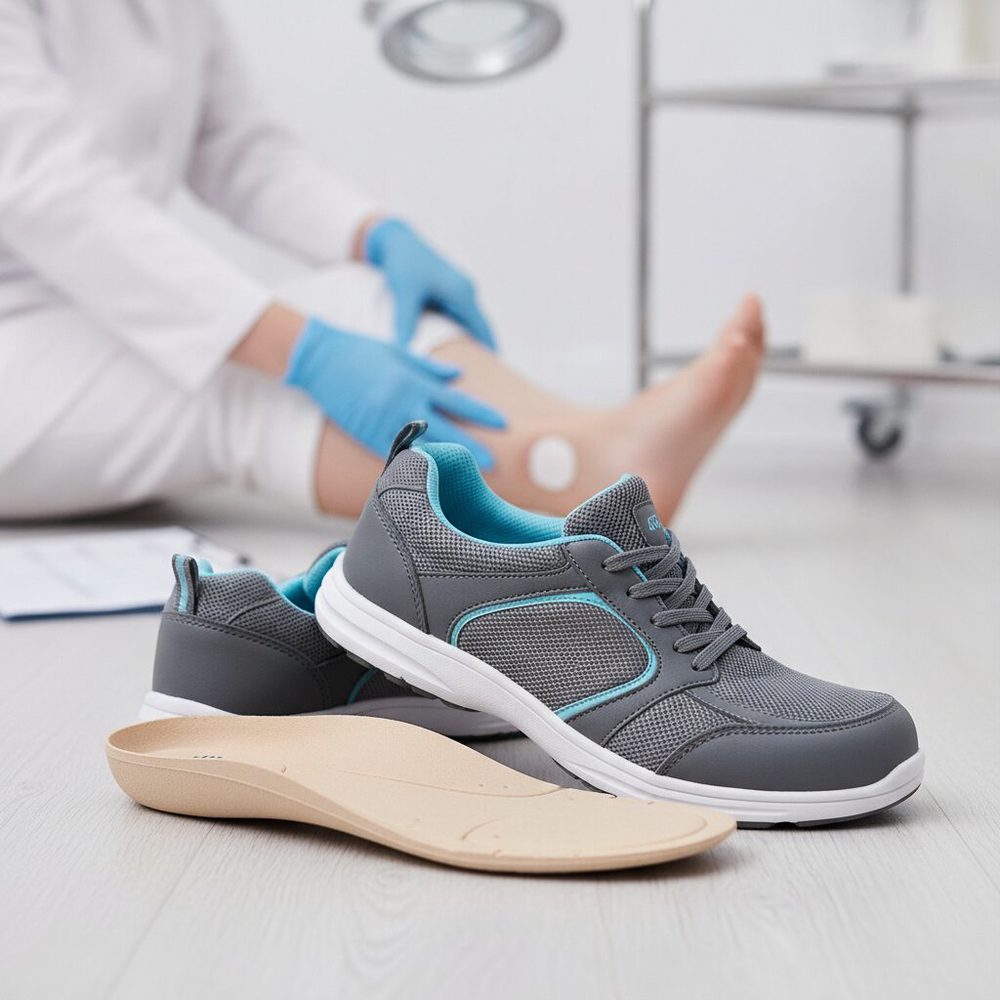
Diabetic shoes are designed to reduce friction and pressure in people with diabetes, protect the foot from external impacts, and help prevent skin ulcers. The term “orthopedic” does not always mean they are suitable for diabetes; diabetic shoes have more specific features, particularly regarding inner surface safety and pressure distribution.
Features of diabetic shoes typically include the following:
- Wide and high toe box: Reduces pressure on the toes and alleviates pressure in cases of deformities such as hammertoe or hallux valgus.
- Seamless or minimally sewn interior: Even small protrusions from internal seams, such as those on labels, can cause friction sores in people with diabetes.
- Removable insole: Facilitates compatibility with diabetic insoles or custom-made insoles.
- Cushioning and pressure distribution: Aims to reduce pressure, particularly on the metatarsal heads (under the ball of the foot) and the heel.
- Heel stability (rigid heel counter): Reduces friction by minimizing foot slippage inside the shoe.
- Adjustable closure (laces/Velcro): Provides a more secure fit to accommodate swelling that may fluctuate throughout the day.
- Non-slip sole: Reduces the risk of falls; balance issues may accompany diabetes.
The most critical factor when selecting “diabetic footwear” is not that the shoe “doesn’t feel too tight”; rather, it is that it does not create constant pressure or friction at any point on the foot. For this reason, instead of relying solely on the size, the internal volume, toe box width, and safety of the inner surface should be evaluated together.
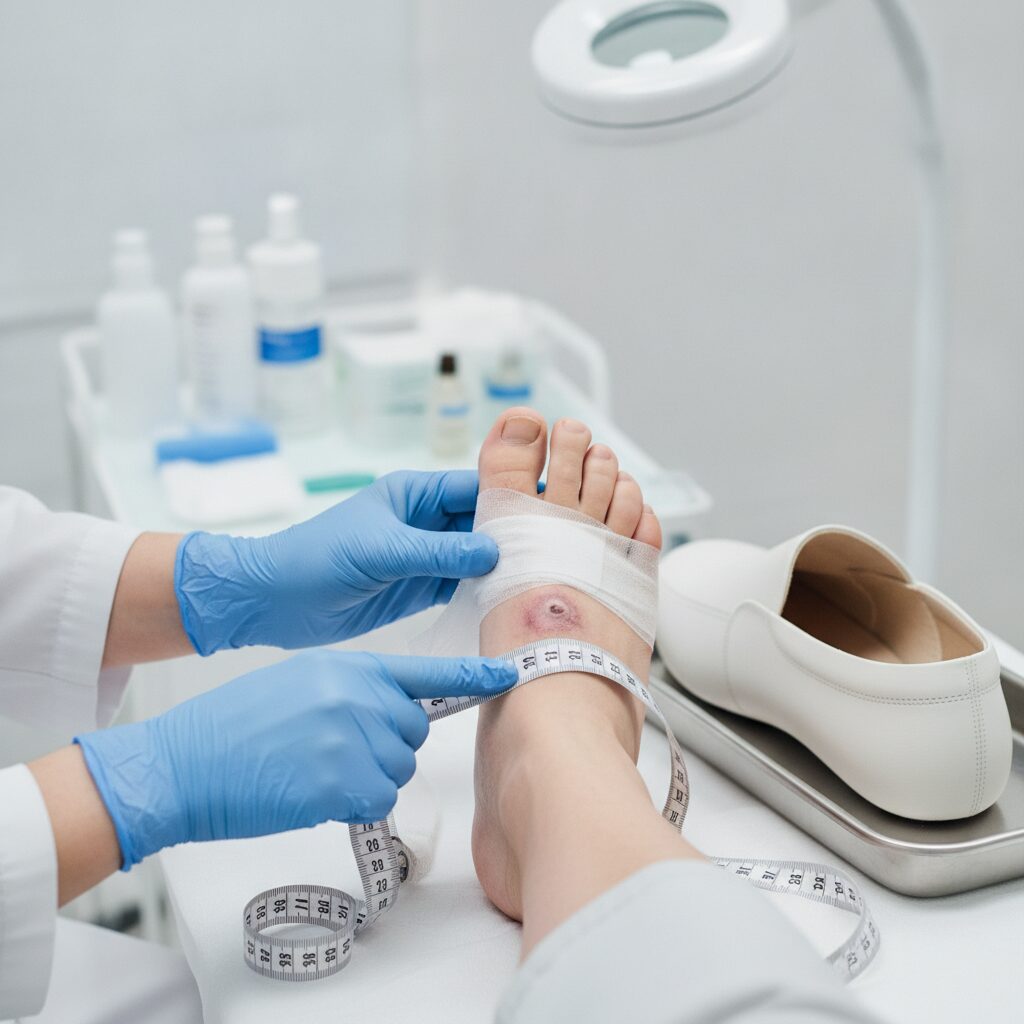
What should shoes for people with diabetes be like, and who must wear diabetic shoes?
Shoes for people with diabetes should be designed to gently hug the foot without constricting it, distribute pressure evenly, prevent irritation of the inner surface, and accommodate changes in swelling. The level of risk varies among people with diabetes; however, the use of diabetic shoes becomes much more critical for certain groups.
Who is considered to be at higher risk?
If any of the following conditions apply, a person with diabetes should choose their shoes more carefully and, if necessary, seek an expert evaluation:
- Reduced sensation or loss of sensation in the feet (suspected neuropathy)
- A history of foot ulcers
- Pronounced calluses, frequently recurring blisters
- Foot deformities (hallux valgus, hammertoe, fallen arch, etc.)
- Signs of circulatory problems (cold feet, discoloration, slow-healing cracks)
- Diagnosis or suspicion of Charcot foot (sudden swelling, increased heat, change in shape)
If you have these risk factors, “everyday athletic shoes” may not provide adequate long-term protection, even if they feel comfortable. Especially in cases of neuropathy, a person may not notice when the shoe is rubbing against the foot; this can exacerbate the problem of “diabetic foot ulcers.” The following content may be helpful for understanding the symptoms of neuropathy: Symptoms of Foot Numbness and Nerve Damage in Diabetes: How to Recognize Neuropathy?
Practical Selection Chart by Risk Level
The table below provides a quick framework for answering the question, “Which shoes for which situation?”:
| Risk Level | Shoe Priorities | Need for Insoles | Daily Check |
|---|---|---|---|
| Low risk (no loss of sensation, no deformities) | Wide toe box, soft inner lining, non-slip sole | Comfort insoles may be used | Daily brief check |
| Moderate risk (mild neuropathy/deformity/calluses) | Seamless inner lining, removable insole, stable heel | Diabetic insoles are frequently recommended | Daily check in a mirror |
| High risk (history of ulcers, severe deformity/Charcot) | Pressure-relieving insole, high-volume, specialist referral | Often custom-made insoles | Daily + frequent clinical follow-up |
The risk persists even at home; walking barefoot or wearing slippers with hard soles can increase the risk of minor injuries. For this reason, “diabetic slippers” or closed, protective indoor shoes are a safer option for many people.

How to Choose a Diabetic Insole: Are Ready-Made Insoles or Custom-Made Insoles Better?
Choosing a diabetic insole involves selecting one that reduces pressure points on the foot, absorbs shock, and provides balanced support without causing the foot to slip inside the shoe. An insole isn’t considered good simply because it’s “soft” on its own; what matters is proper pressure distribution and how well it fits with the shoe.
Off-the-shelf insoles or custom-made insoles?
Off-the-shelf insoles may be sufficient for comfort and mild pressure relief in low-to-moderate-risk cases; custom-made insoles, however, are more suitable for pronounced pressure points and deformities. Custom insoles are more commonly recommended in the following situations:
- Recurrent calluses or blisters (in the same area)
- Excessive load on a specific point due to foot deformity
- History of a diabetic foot ulcer
- Identification of “high-pressure areas” in gait analysis or pressure mapping
What features should be looked for in diabetic insoles?
A good diabetic insole should reduce pressure without increasing friction within the foot. Practical checklist:
- Pressure distribution: Should distribute the load across the metatarsal heads and under the heel
- Shock absorption: Should reduce microtrauma on hard surfaces
- Heel cup: Should stabilize the heel
- Surface material: A material that manages sweat and does not irritate the skin
- Fit within the shoe: Should not “shrink” the shoe’s interior volume; should not cause pinching in the toes
Brief comparison for material selection
| Material | Pros | Considerations |
|---|---|---|
| EVA | Lightweight, good cushioning | May compress and lose shape over time |
| PU (polyurethane) | More durable, stable support | Pressure may increase if chosen too stiff |
| Gel/silicone inserts | Localized shock absorption | Friction may increase if the foot slips |
| Carbon supports | Stability and guidance | Not suitable for every foot type; expert selection is important |
When should insoles be replaced?
Insoles should be replaced when they become compressed, lose their shape, show surface wear, or when new pressure points or calluses begin to form. Odor or moisture issues can also reduce the material’s effectiveness. There is no single answer to the question “How often should insoles be replaced?”; the lifespan depends on usage, weight, walking distance, and material durability.
Shoe Size and Measurement: How to Measure Correctly at Home?
Choosing the right size starts with measuring at the end of the day, taking into account the foot’s swelling (edema) throughout the day. Step-by-step guide:
- Take the measurement at the end of the day (your feet may be wider then).
- Measure each foot separately; choose the size based on the larger foot.
- Try on the shoes with diabetic socks or the socks you’ll wear daily.
- Leave about 1–1.5 cm of space between the tip of your longest toe and the toe box of the shoe.
- While standing, check for heel slippage and friction; if the heel “slides,” friction may increase.
- Feel the inside of the shoe with your hand: are there any stiff seams, creases, or small protrusions?
If you’re prone to swelling, it’s even more important that the shoe is adjustable. For more detailed information on foot swelling/edema: Foot Swelling and Edema in Diabetes: Causes, Symptoms, and Treatment
What should the protocol be for safely breaking in new shoes at home?
The best way to safely wear new shoes is to wear them for short periods during the first week and check your skin after each use. A practical plan:
- Days 1–2: Wear them for 30–60 minutes, then take them off
- Days 3–4: Wear them for 1–2 hours
- Days 5–7: Gradually increase the duration
- Each time: Check the top, sides, heel, and sole of your foot with a mirror
If redness does not subside within 20–30 minutes, recurs in the same area, or blisters begin to form, the fit of the shoes or insoles should be reevaluated.
Which shoes should you avoid?
Shoes with narrow toes, stiff inner seams, high heels, or thin soles can increase the risk of pressure sores in people with diabetes. Those to be avoided in particular:
- Pointed toes, narrow fit
- Stiff/thick inner seams, models with irritating inner labels
- High heels (shifts pressure to the forefoot)
- Very thin soles (increase impact from stones and hard surfaces)
- Slippers worn barefoot that do not protect the foot
When should you see a doctor?
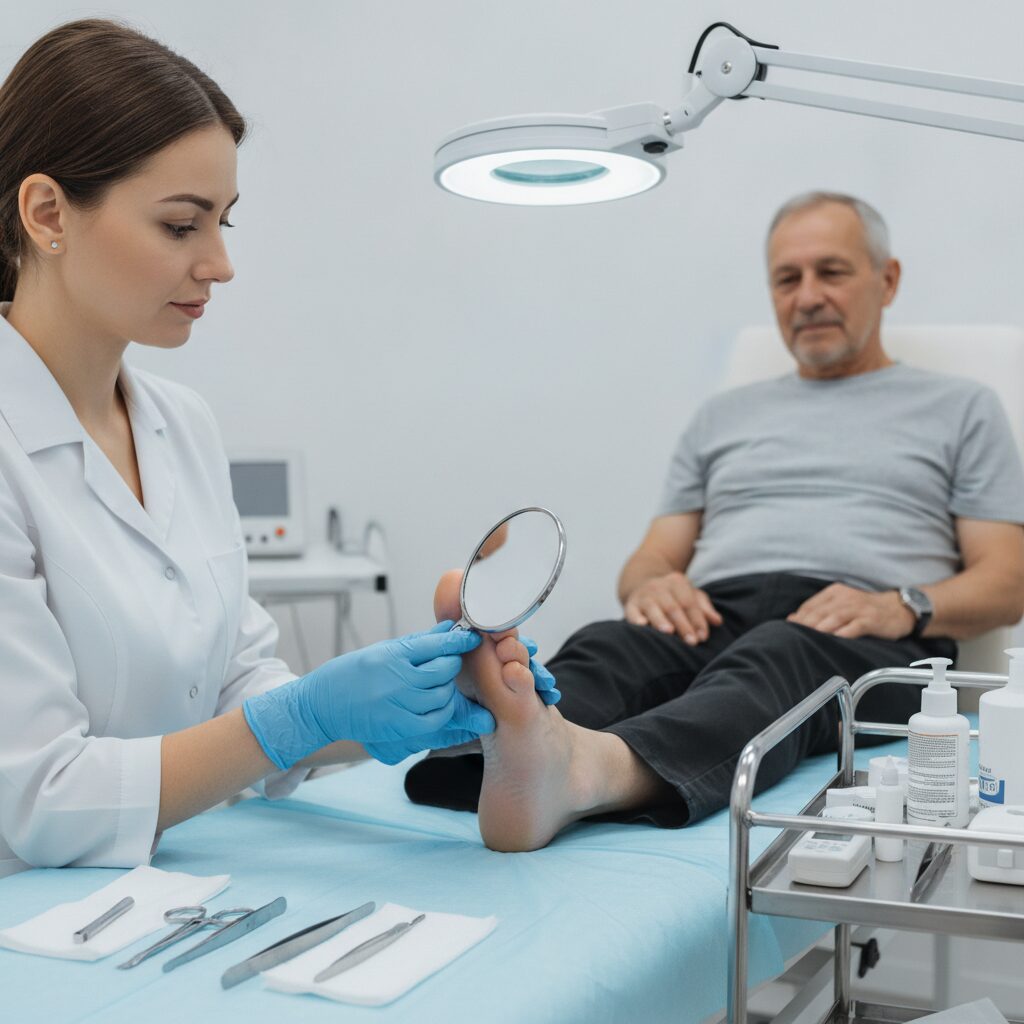
If you have a foot wound, discharge, foul odor, blackening, sudden swelling/increased heat, or rapidly progressing loss of sensation, you should seek medical attention without delay. Additionally, if a mark or injury caused by a shoe does not improve within 24–48 hours, an evaluation is necessary. Home care is also important in reducing the risk of diabetic foot ulcers; you can find the daily check steps in this guide: Diabetic Foot Care: A Guide to Daily Prevention at Home (Nail, Callus, and Foot Checks)
Related Links
- Which Doctor and Department Should You Visit for Diabetes and Diabetic Foot?
- Gangrene in the Diabetic Foot: Symptoms, Stages, and Treatment Options Without Amputation
- Diabetic Foot Care: A Guide to Daily Prevention at Home (Nail, Callus, and Foot Checks)
- Symptoms of Foot Numbness and Nerve Damage in Diabetes: How to Recognize Neuropathy?
- Foot Swelling and Edema in Diabetes: Causes, Symptoms, and Treatment
- Blood Sugar Control and Diabetic Foot Ulcer Healing: Why Is HbA1c Important?
- Wagner and PEDIS Classification of Diabetic Foot Ulcers: Staging and Significance
This content is for informational purposes only. The information on this site is meant to support you; it does not replace a physician's medical examination, diagnosis or treatment. Please consult a doctor for decisions about your health.