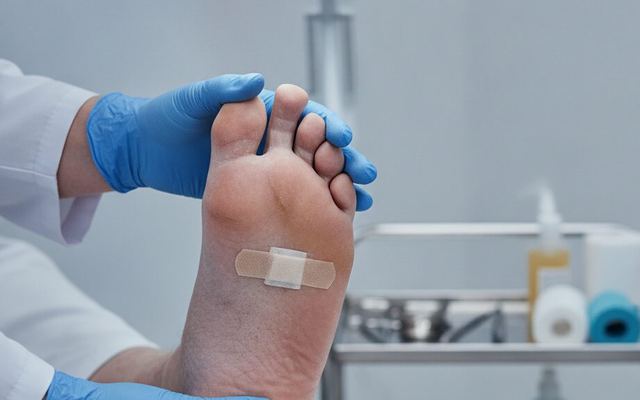


What measures can be taken to prevent diabetic foot ulcers?
Taking some simple yet effective measures can protect patients’ foot health and prevent serious complications. The main measures include:
1. Regular Foot Inspection
- Inspect your feet daily
- Check for cuts, injuries, blisters, and redness
- Monitor for signs of infection
2. Foot Hygiene
- Wash your feet once a day with warm water
- Avoid using very hot water
- Dry the spaces between your toes thoroughly
3. Moisturizing and Care
- Use moisturizing cream regularly
- Avoid applying cream between your toes
- Prevent fungal infections
4. Correct Shoe Selection
- Wear shoes that fit comfortably
- Avoid tight or narrow shoes
- Use soft, seamless socks
5. Foot Protection Measures
- Protect your feet from excessive pressure and trauma
- Avoid standing for long periods
- Prevent your feet from getting wet
6. Smoking
- Quit smoking
- Improve blood circulation
- Speed up wound healing
7. Blood Sugar Control
- Monitor your blood sugar regularly
- Manage your diabetes
- Reduce the risk of infection

Diabetic Foot Ulcer Treatment Methods
1. Initial Phase: Wound Care
- Clean and disinfect the wound
- Apply sterile dressings
- Antibiotic treatment (if necessary)
2. Middle Stage: Advanced Treatment
- Deep wound care
- Debridement procedure
- Vascular treatment options
3. Advanced Stage: Surgical Intervention
- Surgical debridement
- Amputation if necessary
- Infection control
4. Physical Therapy and Rehabilitation
- Exercises to improve circulation
- Muscle strengthening programs
- Improving walking function